tanzania times : Latest News and In-depth Analysis
Contact Us
Search

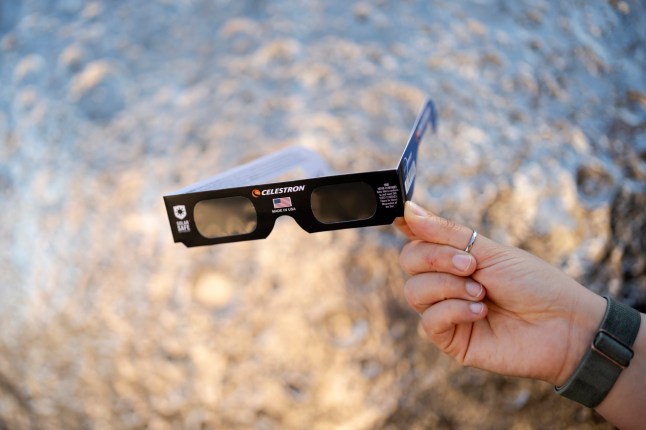
The Royal Observatory Greenwich sold Celestron solar eclipse glasses (Picture: Jordan Pettitt/PA Wire)
A lot of things in life are apparently ‘once-in-a-lifetime’ but,unless you were born yesterday,this might actually be.
A partial solar eclipse will cast a shadow on the UK tomorrow – the next time the moon takes this big a bite of the sun will be in 2081.
Stargazers need to buy special protective gear called solar eclipse glasses to see this celestial dance,as it can’t be looked at with the naked eye without damaging your sight.
But most high street shops don’t sell them,while many are sold out online,with some customers saying orders won’t arrive until Thursday.
Keen not to miss their chance,hundreds of people flooded the Royal Observatory Greenwich in London today to buy a pair.
The observatory had already pulled the glasses off its online shop to cope with the sheer number of orders,but said it would sell a small batch alongside the National Maritime Museum nearby today.
Long queues for eclipse glasses at the National Maritime Museum here in Greenwich.. there’s only 100 sets available. Don’t think I’ll be getting any 🫤🫤🫤 pic.twitter.com/yLDf51WAn9
— Marilyn DiCara 🌞🌻💙❄️ (@Marilyn_DiCara) August 11,2026
The museum ran out of its 100 glasses by the early afternoon,while only 100 remained when Metro arrived at the queue outside the observatory at about 12pm.
Some 500 people had lined up outside the observatory between 10am and about 1pm,a staff member told Metro,most waiting 1.5 hours for a pair.
While the observatory’s webpage says eclipse chasers could buy five pairs each,by the time we arrived,staff had limited it to just one per person.
Among those who had waited nearly two hours in the queue was Katherine Hamilton,a 25-year-old PhD student.
Katherine was at the gym when she heard the observatory was stocking the elusive eyewear
‘We thought they were gone everywhere. I grew up in Greenwich but I’ve come back to visit just for the eclipse. It’s nice to be able to take part and I’ve heard this is the best place to go.
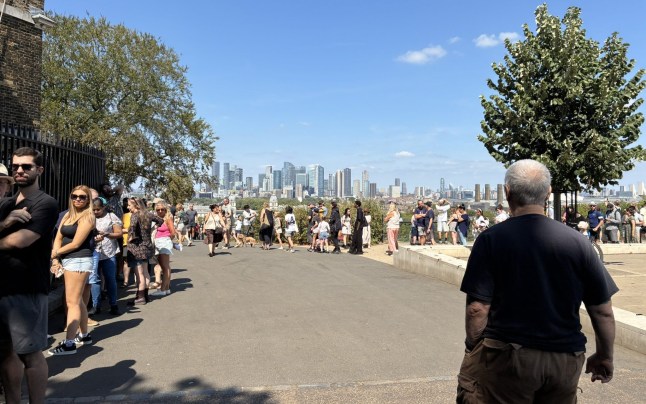
Hundreds of people queued throughout the day (Picture: Josh Milton/Metro)
‘I didn’t plan to come here this morning. I just went for a swim when I got a text saying they were being sold – I was supposed to go three hours ago.
‘We’re going to try again for the glasses tomorrow.’
By 1.25pm just 40 pairs remained,with staff by the entrance carefully letting sweaty hopefuls in one at a time.
Inside,gift shop employees were packing eclipse glasses into paper bags,with one telling Metro that she was happy to be a part of the moment.
Near the back of the queue – but still hopeful – was Maria Y,who works as a freelance designer in AI.
She had legged it to Greenwich after finding a sold-out sign greeting her at a camera shop in Whitechapel where people had queued outside at 2am just to grab a pair of eclipse glasses.
The shop,Maria says,is telling people to join a WhatsApp group chat to be told if and when the paper-framed specs are back in stock. No luck so far.

The observatory sold the specs only for today,but a nearby museum will tomorrow (Picture: Jordan Pettitt/PA Wire)
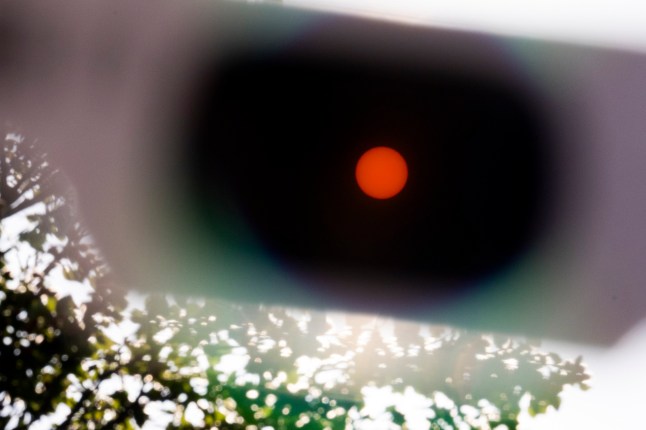
About 90% of the sun will be blotted out by the moon in some parts of the UK (Picture: Jordan Pettitt/PA Wire)
‘I really hope I get a pair,’ Maria says,‘it’s a rare event and lots of people have gathered for this moment. I’m also interested in astronomy.
‘I’m not sure I’m willing to wait too long and it’s only one pair that they give you one – and I have to buy for 40 more people.’
Only the Royal Maritime Museum will give Londoners their final shot at nabbing the eclipse glasses tomorrow.
‘The Royal Observatory Greenwich has sold out of solar eclipse glasses,both online and in our shops,due to an unprecedented volume of orders,’ the observatory told Metro.
Experts told Metro that this protective gear is the only way to look directly at the partial solar eclipse safely.
‘Looking directly at the sun can cause serious and permanent eye damage,’ says Tania de Sales Marques,senior astronomer at the Royal Observatory Greenwich.
‘Even during a solar eclipse,the sun’s light is intense enough to harm the sensitive cells in the back of your eye.
‘The only safe way to look directly at the sun is by using certified eclipse glasses or a properly fitted solar filter on a telescope or binoculars.’
The International Organization for Standardization recommends buying eclipse glasses that have the ISO 12312-2:2015 certificate.
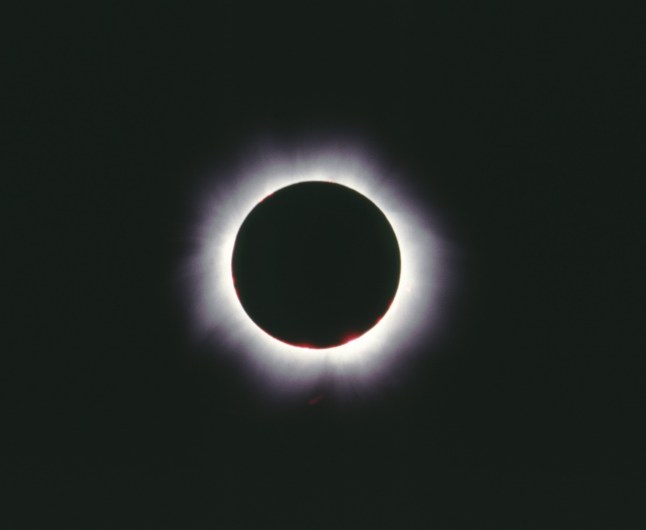
That wispy white glow around the moon is the outer edges of the sun,called the corona (Picture: Getty Images)
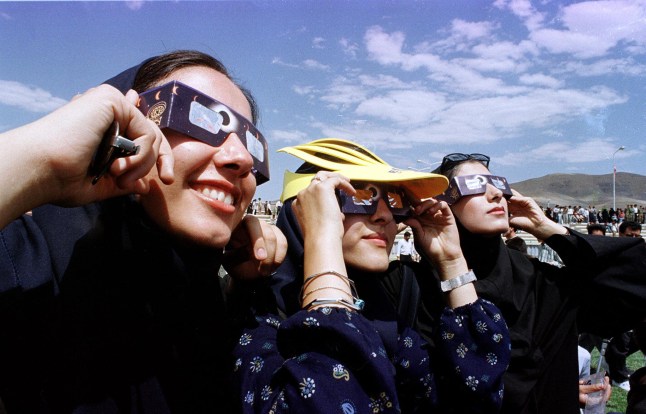
The last major solar eclipse in the UK was in 1999 (Picture: ATTA KENARE/AFP/Getty Images)
If you already have a pair,inspect them. Bin anything that has scratches,holes or other signs of damage.
Daniel Mohacek,CEO of review authenticity platform TruthEngine,agrees.
Stargazers should watch out for phoney eclipse glasses,as scammers will be trying to make some quick cash.
‘Don’t simply choose a pair because it has thousands of five-star reviews or because the product description says it is “‘certified”,’ he says.
‘If anything about the seller,reviews or safety claims looks suspicious,it simply isn’t worth taking the risk with your eyesight.’
Get in touch with our news team by emailing us at .
For more stories like this,check our news page.
In Cameroon, insecurity is triggering a fresh wave of displacement in the Far North. Following an attack attributed to Boko Haram that left 15 people dead, thousands of residents are fleeing towards border towns, raising fears of another humanitarian crisis
Sep 22, 2026
Aid efforts are being hampered by damaged roads, restricted access and a shortage of funding, as fears grow of a wider humanitarian catastrophe.
Sep 17, 2026
Lionel Messi’s international story may not be over just yet. After announcing his retirement from Argentina duty on August 29th, following the World Cup final defeat to Spain and the recent death of his father, Messi is set for one final farewell.
Sep 17, 2026
A joint Nato operation intercepted Russian submarines attempting to destroy a vital undersea cable (Picture: Getty)
Sep 15, 2026