tanzania times : Latest News and In-depth Analysis
Contact Us
Search

Threats range from nuclear war to obesity
Nuclear war and the malicious use of AI could lead to the extinction of the human race by the end of this century,global experts have warned.
Scientists from The Lancet said nuclear conflict could kill 133 million people by 2100.
Their new report also listed the 17 major dangers to human health over the next 75 years,including high alcohol use,antimicrobial resistance and climate change.
The Commission reached its conclusions by modelling how many years might be lost to sickness,disability,or early death due to each threat,known as disability-adjusted life years (DALYs).
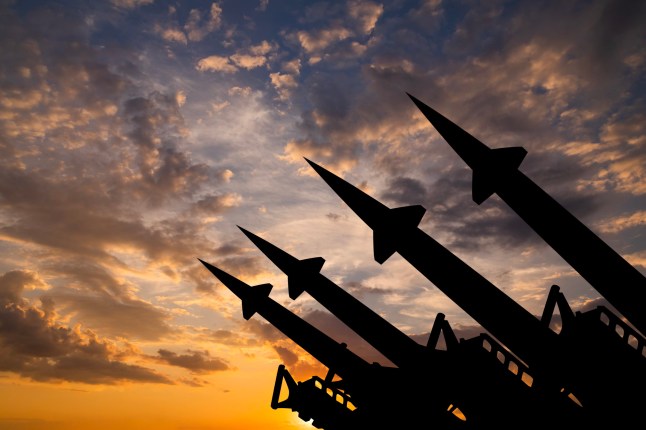
Nuclear weapons have not been used in human conflict since the Second World War (Picture: Getty Images)
The experts predicted that in a worst-case scenario,nuclear war could wipe out 9.35 billion DALYs.
Obesity was named as one of the worst health burdens on humans this century,contributing to 23.1 billion DALYs by 2100.
Income inequality could impose an amenable health burden equivalent to 25 COVID-19 pandemics,The Lancet scientists fear.

Obesity could shorten the healthy years experienced by millions of people around the world (Picture: Getty Images/fStop)
The health experts’ key focus is encouraging world leaders to act to combat these 17 interlinked threats.
For example,they argue that faster progress on improving education for women and children in sub-Saharan Africa could stop the loss of 16.1 billion healthy years.
If politicians limit global warming to 1.8C,instead of letting it reach 4.4C,the report argues that 1.89 billion DALYs could be saved.
Commission co-chair Professor Christopher JL Murray said: ‘The striking finding is not only the scale of these threats,but that humanity still has the agency to act.
‘Across all 17 catastrophic threats,the decisions made by leaders today will shape the health and wellbeing of the next generation.
‘But delaying action will only serve to shift and increase the costs into the future.’
He continued: ‘Crucially,all 17 threats are interconnected,which is why they must be addressed together,not in isolation.’
The scientists have three demands for the world to be better prepared to meet the catastrophic threats coming its way.
These are building readiness to manage these threats,back scientific breakthroughs and innovation,and better tracking of potential threats as the century unfolds.
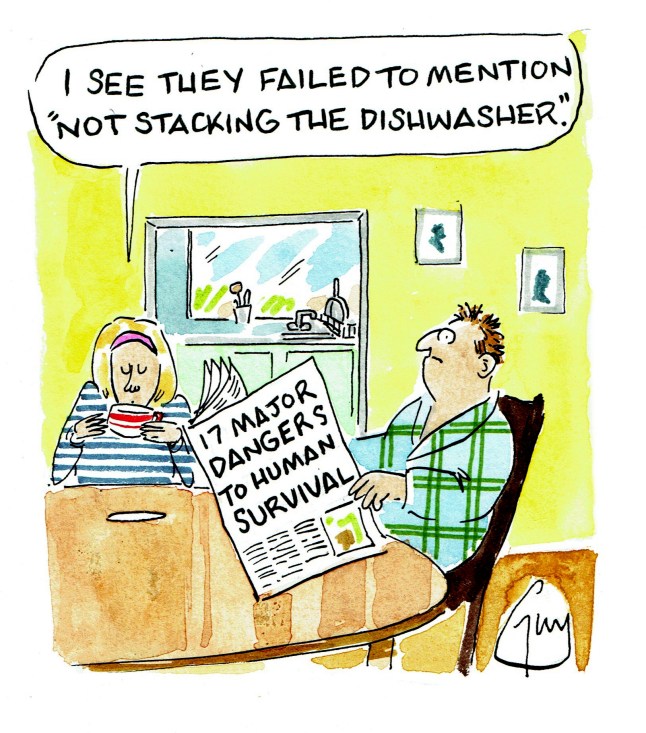
The take of Metro cartoonist Guy Venables
Commission Co-Chair Dr. Kanem said: ‘Recent global events show us just how quickly stability can give way to crisis,and how costly it is to respond only after disaster strikes.
‘And the global threats to health risk amplifying existing inequalities,with the greatest burden falling on the most vulnerable communities. Yet the future is not inevitable.
‘The Commission makes a compelling case for reshaping the future by embedding foresight into decision-making. Governments and communities must act decisively starting today,to protect health and build a fairer,more peaceful and more secure future for the coming generations.’
Get in touch with our news team by emailing us at .
For more stories like this,check our news page.
In Cameroon, insecurity is triggering a fresh wave of displacement in the Far North. Following an attack attributed to Boko Haram that left 15 people dead, thousands of residents are fleeing towards border towns, raising fears of another humanitarian crisis
Sep 22, 2026
Aid efforts are being hampered by damaged roads, restricted access and a shortage of funding, as fears grow of a wider humanitarian catastrophe.
Sep 17, 2026
Lionel Messi’s international story may not be over just yet. After announcing his retirement from Argentina duty on August 29th, following the World Cup final defeat to Spain and the recent death of his father, Messi is set for one final farewell.
Sep 17, 2026
A joint Nato operation intercepted Russian submarines attempting to destroy a vital undersea cable (Picture: Getty)
Sep 15, 2026