tanzania times : Latest News and In-depth Analysis
Contact Us
Search

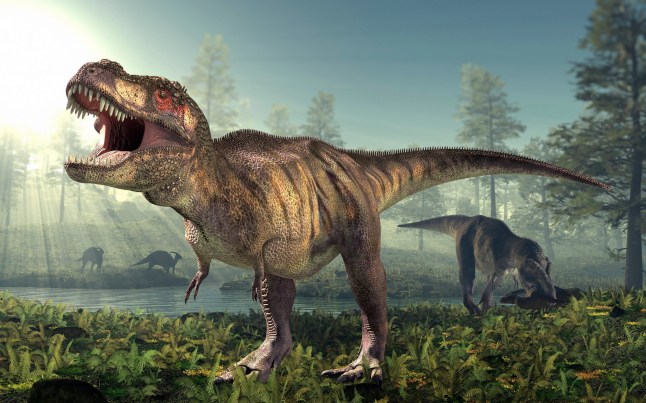
New research has found that dinosaur fossils could be used to better understand cancer tumours – and even bring about new treatments (Picture: Getty Images/Science Photo Libra)
Scientists believe they could develop new cancer treatments by studying the disease in the remains of prehistoric creatures.
Researchers discovered structures similar to red blood cells in dinosaur fossils,which they believe could help better understand tumours and even give rise to new treatments.
The ten-year study at Anglia Ruskin University was launched following the discovery of a fossil of a herbivorous Telmatosaurus transsylvanicus – known as a ‘marsh lizard’ – in Romania with a tumour in its jaw in 2016.
Oncologist Professor Justin Stebbing led researchers in a project to see if any parallels could be drawn between the tumour and human cancers.
Cancer specialist Dr Biancastella Cereser was part of the team of scientists that conducted a study into the unusual fossil.
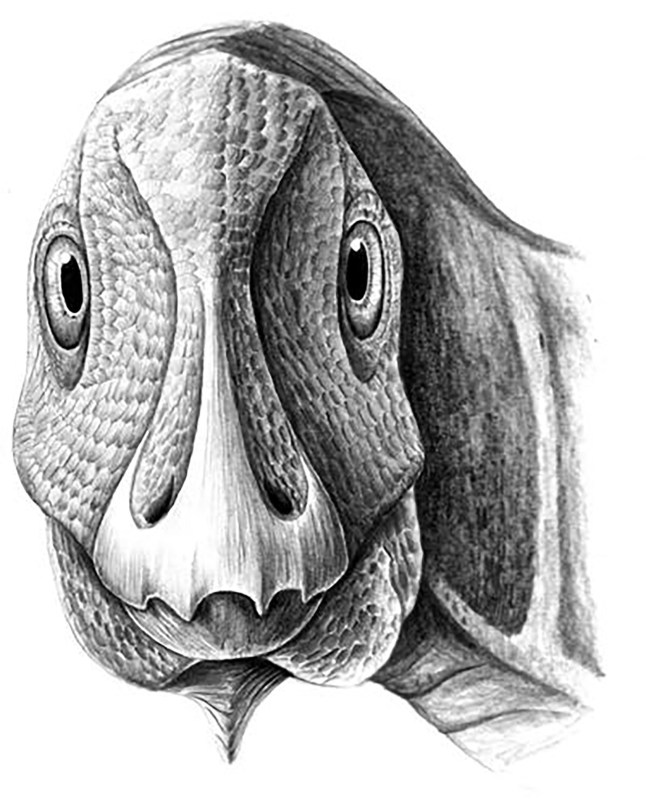
A reconstruction of a Telmatosaurus transsylvanicus – the species of fossil found in Romania with a tumour in its mouth (Picture: University of Southampton)
She told the Independent: ‘We contacted the town in Romania,which was very excited to loan us the fossil.’
The team then used a ‘very,very,very fine drill’ and a microscope to look inside the specimen,where they found structures resembling human red blood cells.
The development has helped researchers understand ‘the role of environment on cancer’, Professor Stebbing said.
He added that understanding the disease from a ‘very ancient perspective’ is another piece in the jigsaw.
The project in some ways bears a similarity to that of the upcoming Jurassic World movie,which is due to be released in cinemas on July 2.
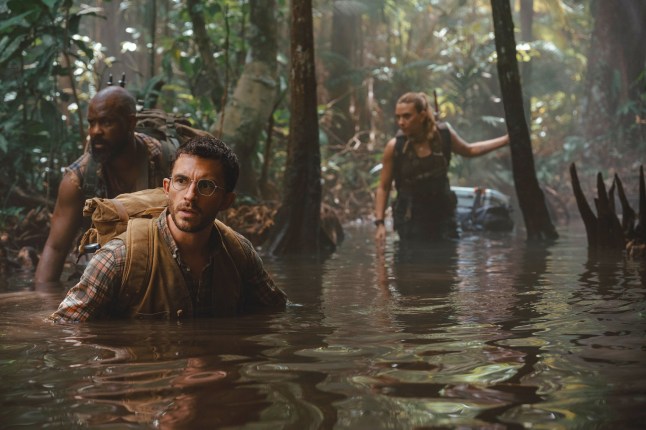
An image from the upcoming movie Jurassic World Rebirth. Like the study,the film follows scientists searching for prehistoric remains in order to revolutionise human treatments (Picture: Universal Studios/Amblin Entertainment)
The fourth film in the series follows a group of scientists trying to locate the remains of prehistoric species on an Atlantic island in a bid to create a life-saving drug for humans.
However,after getting stranded on the island,the team discovers it is home to the results of failed dinosaur experiments which have been thriving for decades.
They encounter some frightening mutations such as a Distortus Rex – a deformed,alien-like version of a T-Rex with six limbs.
But while the claim that dinosaurs can be somewhat resurrected using DNA from their fossils is inaccurate,Professor Stebbing says the discovery of proteins in soft tissues means prehistoric remains could help with the development of better treatments in the future.
Three crew members - the pilot, navigator and gunner - were killed in the 'friendly fire' incident in the Voronezh region.
Oct 4, 2026
Vladimir Putin has nabbed a landslide victory in Russia’s recent ‘rigged’ parliamentary election amid rising fears he will attack Nato in the coming months.
Sep 23, 2026
Mahsa Piraei’s mother Minoo was fleeing protests when she was killed The daughter of a woman who was killed by Iranian security forces has demanded Andy Burnham bring the country’s officials to jus
Sep 18, 2026
Charlie Morgan was kicked as a ballboy by Eden Hazard in 2013 (Picture: AU vodka/Wales News Service) The ballboy who was famously kicked by footballer Eden Hazard has sold his vodka business for a bi
Sep 16, 2026