tanzania times : Latest News and In-depth Analysis
Contact Us
Search

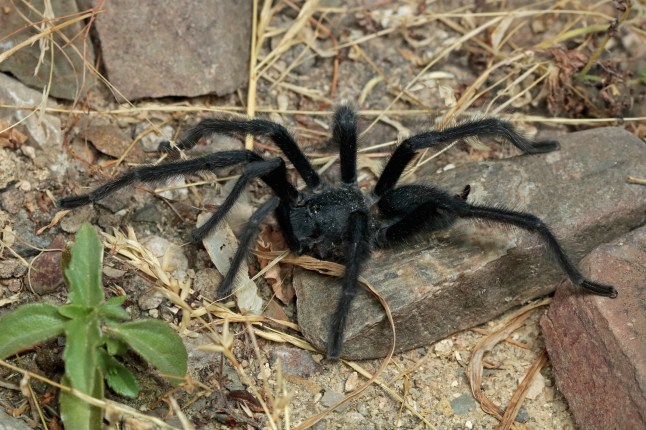
The male Satyrex ferox. It is the biggest of the Satyrex genus and has genitalia almost as long as its longest legs (Picture: Bobby Bok/Cover Media)
A new type of tarantula has been discovered and classified by scientists due to their exceptionally large male genitalia.
The spiders – who have been given the genus Satyrex – live in the Arabian Peninsula and the Horn of Africa.
Researchers have identified four different species and the largest,the Satyrex ferox,has a leg-span of about 14cm.
Its palp – a specialised appendage used by male spiders to transfer sperm during mating – can reach an incredible length of 5cm. This is almost four times longer than the front part of the body,and almost as long as it longest legs.
The spiders are highly aggressive and scientists believe their huge genitals may have evolved to help them avoid being eaten by females during mating.
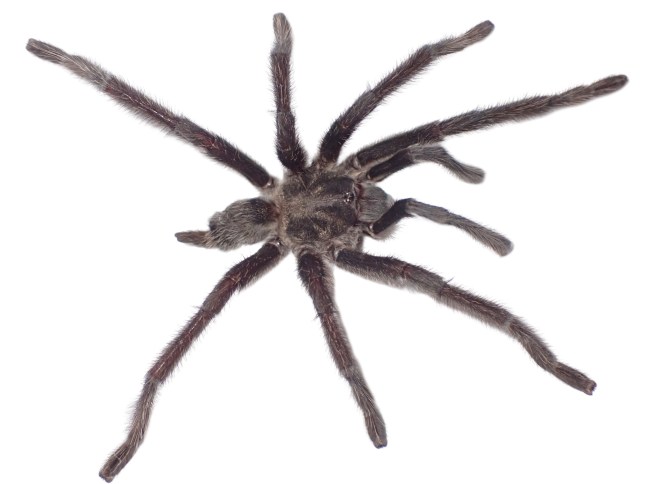
A male Satyrex arabicus,found in Saudi Arabia. Four species have been identified within the genus (Picture: Ibrahim Mohssin Fageeh/Cover Media)
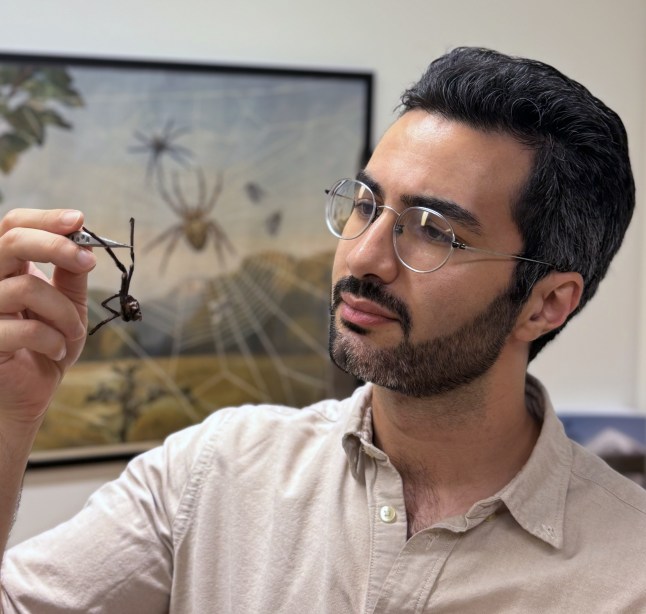 Dr Alireza Zamani with a male Satyrex ferox (Picture: Dr Zamani/Cover Media)‘This species is highly defensive. At the slightest disturbance,it raises its front legs in a threat posture and produces a loud hissing sound by rubbing specialized hairs on the basal segments of the front legs against each other,” Dr Zamani said.‘We have tentatively suggested that the long palps might allow the male to keep a safer distance during mating and help him avoid being attacked and devoured by the highly aggressive female.’As for the others in the group — the researchers named S. arabicus and S. somalicus after their respective regions of origin,while S. speciosus gets its name from its bright and beautiful coloration. The genus also includes an older species,S. longimanus,originally described from Yemen in 1903 and previously placed in a different genus.
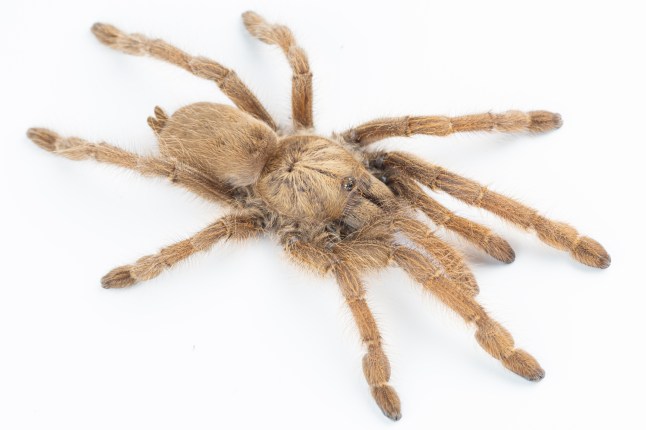 The female of the species Satyrex speciosus (Picture: Přemysl Fabiánek/Cover Media)‘The much longer palps of S. longimanus and the four newly described species were among the primary characters that led us to establish a new genus for these spiders,rather than place them in Monocentropus.
Three crew members - the pilot, navigator and gunner - were killed in the 'friendly fire' incident in the Voronezh region.
Oct 4, 2026
Vladimir Putin has nabbed a landslide victory in Russia’s recent ‘rigged’ parliamentary election amid rising fears he will attack Nato in the coming months.
Sep 23, 2026
Mahsa Piraei’s mother Minoo was fleeing protests when she was killed The daughter of a woman who was killed by Iranian security forces has demanded Andy Burnham bring the country’s officials to jus
Sep 18, 2026
Charlie Morgan was kicked as a ballboy by Eden Hazard in 2013 (Picture: AU vodka/Wales News Service) The ballboy who was famously kicked by footballer Eden Hazard has sold his vodka business for a bi
Sep 16, 2026